Most businesses running Facebook or Instagram ads think about the ad. The creative, the copy, the audience targeting, the budget. They tweak the headline, test different images, adjust the demographic settings, and measure cost per click as the primary indicator of whether the social media ad campaign is working.
Cost per click is not the right metric. What happens after the click is where the money is either made or wasted — and for the majority of local businesses running social ads, what happens after the click is a problem nobody is looking at.
Where Most Ad Budgets Actually Go to Waste
Here is what a typical local business ad campaign looks like from the inside.
The ad gets set up. The targeting is reasonable. The creative is decent. The campaign runs for a month and generates 600 clicks at $1.50 each, a $900 spend. Of those 600 people, maybe 12 converted into leads or customers. The owner looks at the numbers and concludes the ads aren’t working well enough, adjusts the targeting, changes the creative, increases the budget.
The ads were not the problem.
Of those 600 people who clicked, the majority landed on a homepage that loaded slowly on their phone, didn’t immediately connect to what the ad promised, had no obvious next step, and gave them no compelling reason to stay. They left within seconds. The ad did its job — it got someone interested enough to click. The website failed to do its job.
The $900 wasn’t wasted on bad ads. It was wasted on sending traffic to a site that couldn’t convert it.
This pattern repeats across dental clinics, gyms, law firms, restaurants, med spas, plumbing companies, roofing companies, and every other local business category running paid social. The ad budget gets blamed for results that are actually a website problem.
The Landing Page Problem Nobody Talks About
When someone clicks an ad, they arrive somewhere. That somewhere is either a dedicated landing page built specifically for that campaign, or it’s a generic homepage or services page that happens to be where the ad pointed.
Most local businesses send ad traffic to their homepage.
This is a significant mistake. The homepage is designed to introduce the business to someone who found it organically and is willing to explore. It has navigation, multiple sections covering different aspects of the business, links going in several directions. For someone who just clicked an ad promising a specific offer — a free consultation, a discounted first treatment, a seasonal special — the homepage is a non-sequitur. The offer they clicked for might not even be visible without scrolling.
The disconnect between what the ad promised and what the landing page delivers is called message mismatch, and it’s one of the highest-impact conversion killers in digital advertising. When someone clicks an ad for a free skin assessment at a med spa and lands on a homepage talking about the spa’s philosophy and full treatment menu, the continuity breaks. Their brain has to work to reconnect the ad with the page. Most don’t bother.
A dedicated landing page built for a specific campaign keeps that continuity intact. The headline matches the ad. The offer is the first thing they see. The page exists for one purpose — to convert that specific traffic — and everything on it serves that purpose. Nothing else.

What Happens Between the Click and the Conversion
The journey from ad click to conversion is shorter than most businesses realize, and the drop-off at each micro-step is significant.
Someone sees the ad. They’re interested enough to click — that’s already a qualified signal. They land on the page. In the first three seconds they decide whether to stay or leave. If they stay, they scroll enough to understand the offer. If the offer still makes sense, they look for the action — the button, the form, the phone number. If they find it without friction and trust what they see, they convert.
Every one of those steps has a failure rate. The page load is slow — some leave before it appears. The page doesn’t match the ad — some leave in the first three seconds. The offer is buried — some don’t find it. The form is long — some start it and abandon it. The trust signals are weak — some hesitate long enough to get distracted and close the tab.
A typical unoptimized local business website converts ad traffic at 1 to 2%. A landing page built and optimized for a specific campaign converts at 5 to 15%. That’s not a marginal improvement. At the same ad spend, that’s three to ten times as many leads from the same clicks.
Improving the page is almost always a better investment than increasing the ad budget, because a better page multiplies the return on every dollar already being spent.
Page Speed and Its Direct Cost to Ad Campaigns
This connection is rarely made explicit, so let’s make it explicit.
Every person who clicks your ad and leaves before the page loads is a paid click that generated zero return. You paid for that click. The person arrived, waited, gave up, and left. The cost per click figure in your ad dashboard counts that click the same as one that converted. Your real cost per conversion is higher than the dashboard shows because of the load-time abandonment happening invisibly.
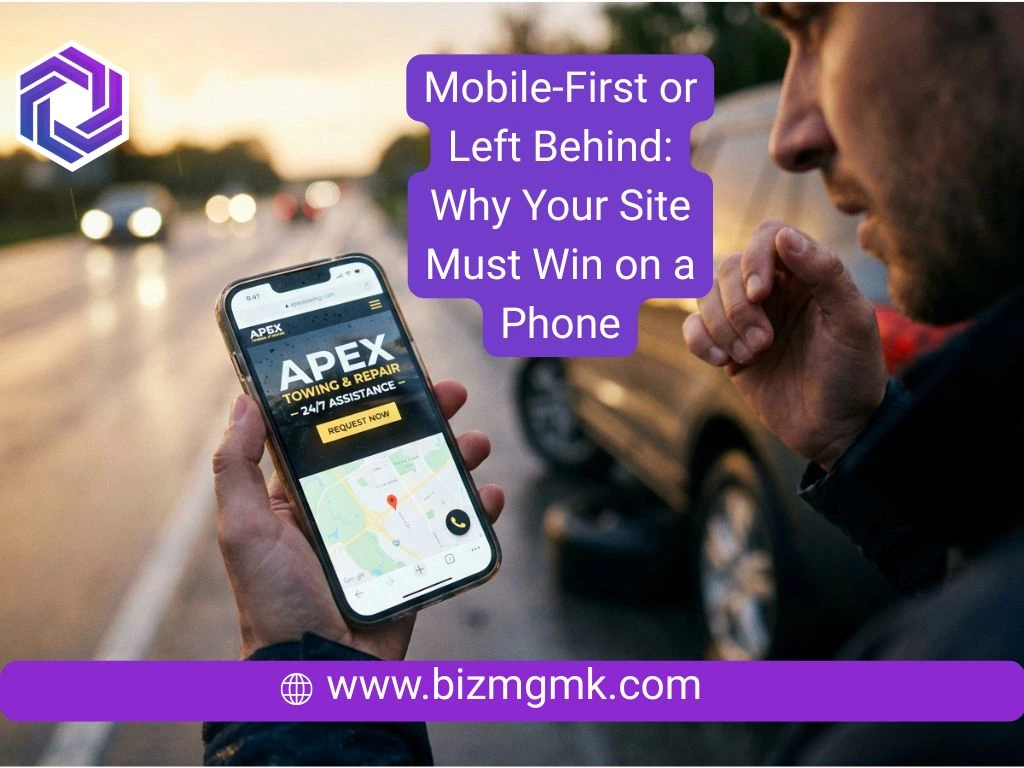
On mobile, where the majority of social media ad traffic arrives, load times on poorly optimized sites frequently exceed five seconds. Google’s research found that over half of mobile visitors leave a site that takes more than three seconds to load. Applied to an ad campaign, this means a significant percentage of your paid clicks are being lost before the page is even seen.
A $1,000 monthly ad budget with a 40% mobile abandonment rate due to load time is effectively a $600 budget. The other $400 was spent sending people to a page they never saw.
Fixing the load time — through image compression, better hosting, removing unnecessary scripts — directly reduces that abandonment and increases the effective return on the same ad spend without changing the ad at all.
Trust Signals That Close Ad Traffic
Organic search traffic and ad traffic behave differently, and the difference matters for how the landing page needs to be built.
Someone who finds your business through organic search has, to some degree, vetted you. They saw your listing, read the description, maybe noticed your review count. They arrived with a baseline level of intent and some initial trust.
Someone who clicked a social ad was interrupted. They were scrolling through content, something caught their eye, and they clicked. Their intent is real — they were interested enough to stop and click — but their trust level is lower. They don’t know you. They saw an ad, which they know is paid placement, and they’re more skeptical than an organic visitor.
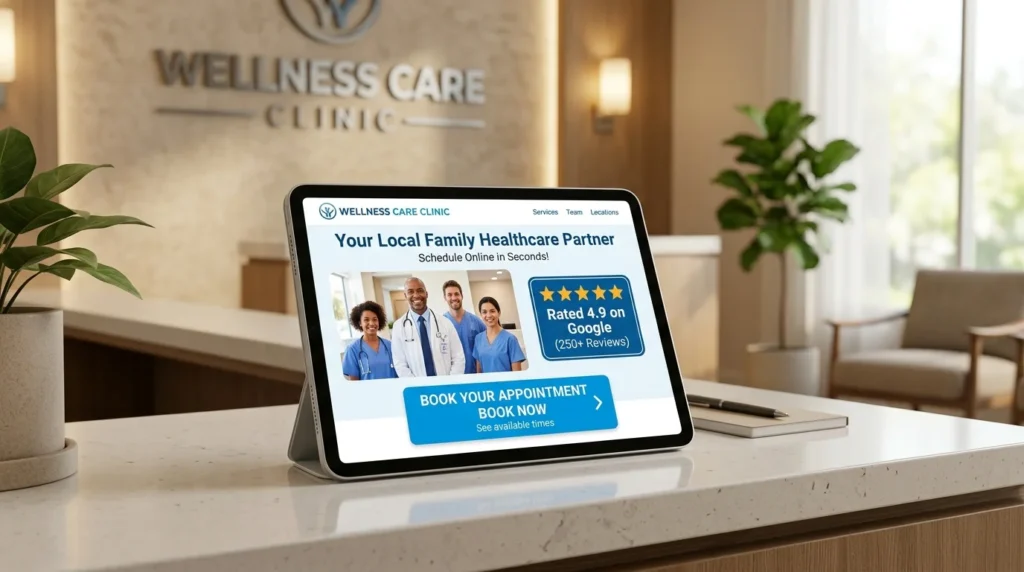
This means ad landing pages need to work harder on trust signals than regular website pages.
For a dental clinic or medical clinic running ads: practitioner credentials and photos need to be visible immediately, not buried on an about page. A recognizable accreditation or association logo near the top of the page does more work than a paragraph about the practice’s philosophy. Patient testimonials with specific outcomes — “I hadn’t been to a dentist in four years and they made the experience completely manageable” — placed near the booking form directly address the hesitation ad traffic is likely to feel.
For a law firm: the attorney’s face, name, and specific relevant experience should be on the landing page, not just linked from it. A specific outcome or case result where publishable, and a clear explanation of what the free consultation involves and what it doesn’t commit the visitor to. People who click legal ads are often anxious about the situation that made them search. The page needs to reduce that anxiety, not add process to it.
For a gym or fitness studio: the free trial or intro offer needs to be prominent and the commitment level needs to be clear. People clicking gym ads are mentally rehearsing reasons not to join. The landing page needs to preempt those reasons — show real members, show the environment, make the first step obviously low-risk.
For a restaurant or cafe: the offer in the ad needs to be immediately visible. If the ad promoted a weekend brunch deal, the landing page should open with that deal, not with a homepage carousel. Make the reservation or order button the most prominent thing on the page.
For a roofing company or general contractor: urgency and credibility together. Reviews with specific job types, a gallery of recent work, a clear explanation of what requesting a quote involves, and response time expectations. Trade service ad traffic is often from people who already have a problem and are comparing a few options quickly. The page that communicates competence and makes the next step obvious wins.
For a spa or med spa: the visual experience of the landing page itself needs to match the treatment promise. A page that looks clinical or busy for a spa ad is already contradicting what the customer is hoping to experience. Photography, whitespace, and calm design aren’t aesthetic preferences — they’re conversion factors for this specific audience.
For HVAC, plumbing, and electricians running emergency service ads: speed of response is the primary trust signal. Prominently stating response times, service area coverage, and 24/7 availability on the landing page addresses the exact anxiety of someone in an emergency situation. A long-form page explaining the company’s history is the wrong content for someone whose heating has just failed in winter.
For real estate: the landing page for a buyer or seller lead ad needs to feel like it belongs to someone who knows the local market, not a generic national agency template. Suburb-specific market data, recent sales, the agent’s local track record. Personalisation at the suburb level is what separates high-converting real estate landing pages from generic ones.
For auto repair shops: transparency is the trust signal that matters most. Clear pricing for common services, certifications visible at the top, customer reviews referencing specific job types. People are skeptical of mechanics by default and ad traffic from someone who doesn’t already know you starts from that skepticism.
For veterinary clinics: the faces of the vets and nurses, the specific services the ad promoted front and center, and reassurance about how the clinic handles nervous animals or first visits. People clicking vet ads are often worried about their pet — the page needs to address that emotional state, not just the transactional one.
For chiropractors: outcome-focused content placed early. Not technique explanations, but results — what patients felt after treatment, what conditions respond well, what a first appointment involves. People clicking chiropractic ads are usually in discomfort and want to know if this will actually help them, not how it works mechanically.
For landscaping and lawn care: before-and-after photos as the dominant visual element, a clear explanation of what the quoted service includes, and an easy quote request that doesn’t ask for too much information upfront. People clicking landscaping ads are often motivated by a specific visual problem they want fixed — the page should show them you can fix it.

How to Calculate What a Bad Website Is Actually Costing You in Ad Spend
This is a number most business owners have never worked out, and working it out is clarifying.
Take your current monthly ad spend. Estimate your current conversion rate from ad traffic — if you don’t know it, check your Google Analytics or Meta Ads dashboard and look at how many people clicked the ad versus how many completed your goal action. If you don’t have that data, a conversion rate of 1 to 2% is a reasonable estimate for an unoptimized local business site.
Now estimate what a properly built landing page could convert at. For most local service categories, 4 to 8% is achievable with a well-built, message-matched, fast-loading page. Use 5% as a conservative estimate.
If you’re spending $1,000 per month on ads and converting at 1.5%, you’re generating 15 leads per month from that spend. At 5% conversion on the same traffic, you’d generate 50 leads per month. The same $1,000. Three times the leads.
The cost to build a proper landing page is typically $500 to $1,500 as a one-off investment. If that page generates an additional 35 leads per month, and even a fraction of those convert to paying customers, the landing page pays for itself within the first month of the campaign running.
Framed differently: every month you run ads to an unoptimized site is a month where you’re paying for traffic that a better page would have converted. The ad spend isn’t the cost. The unconverted clicks are the cost.