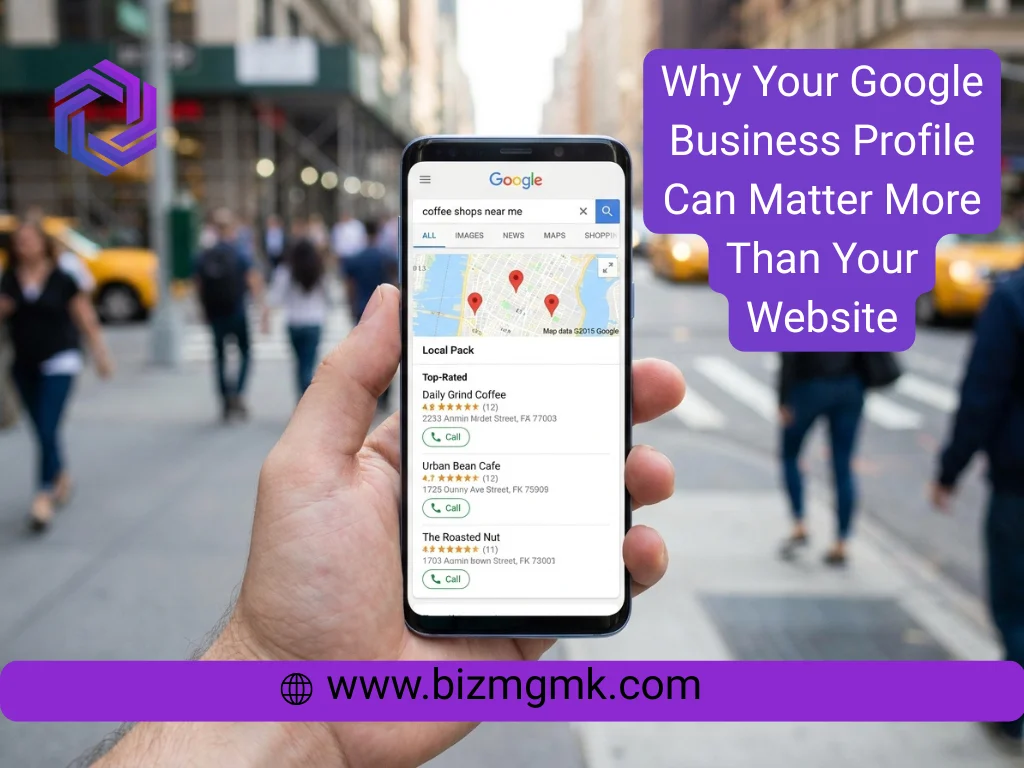
This is the question nobody gives a straight answer to. You ask an agency, they quote you $5,000. You Google it, you find a Wix ad. You ask your cousin who “does websites,” he says he’ll do it for $300.
All three might be the right answer depending on what you actually need. Or completely wrong. Here’s how to think about it without getting taken for a ride — whether you run a dental clinic, a landscaping crew, a law firm, or an auto repair shop.
Why Prices Are All Over the Place
A website is not a product with a fixed price. It’s closer to a renovation — the cost depends on what you’re starting with, what the site needs to do, and who you hire.
A one-page site for a sole trader who just needs to exist online is genuinely a few hundred dollars. A multi-location medical clinic that needs online booking, patient intake forms, HIPAA-conscious design, and local SEO across several suburbs is a completely different project. Comparing quotes without knowing what’s included is how businesses end up either overpaying or buying something that doesn’t do the job.
The other variable is who does the work. A freelancer, a boutique local agency, and a large digital firm have completely different cost structures. None is automatically wrong. But they’re not the same.
What You Actually Need Depends on Your Industry
Before talking to anyone, write down what your site has to do. Not what would be nice — what it must do.
This varies more than most people realize across different types of businesses.
A dental clinic or medical clinic needs online appointment booking, a clear list of services with enough detail to answer pre-visit questions, insurance information, and before-and-after galleries if applicable. Trust signals matter more here than almost anywhere else — people are handing over their health decisions.
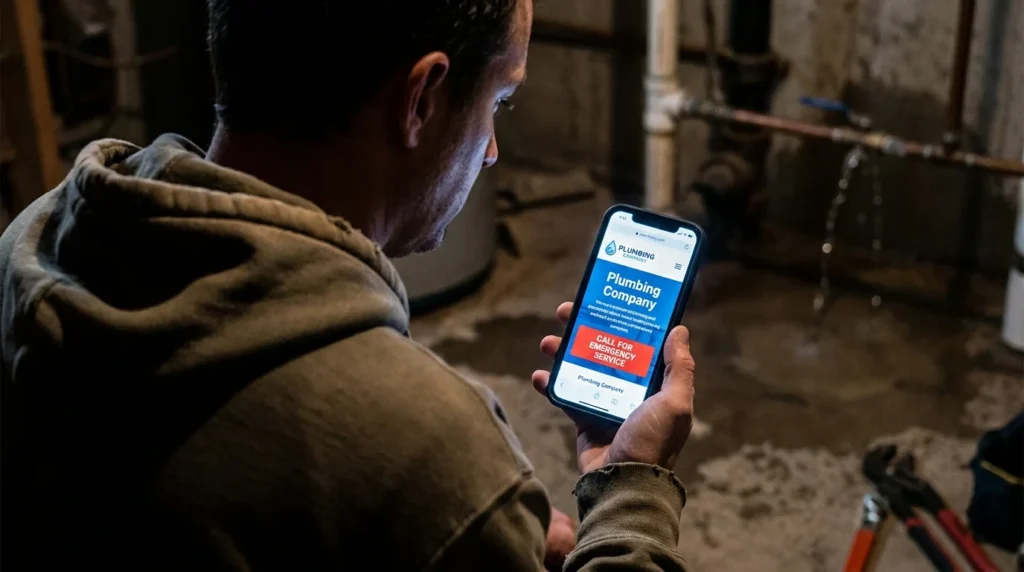
A plumbing company or electrician or HVAC company needs one thing above everything else: to be found when someone has an emergency and to make calling dead simple. Local SEO, a phone number that’s impossible to miss, a service area page, and fast load times on mobile. Someone whose boiler just died isn’t browsing — they’re calling the first credible result they find.
A roofing company or general contractor lives and dies on portfolio. High-quality photos of finished work, before-and-after comparisons, project case studies. A roofing site without a strong visual gallery is asking customers to trust a contractor they can’t evaluate.
A law firm needs to project credibility immediately. Attorney bios with real photos, practice area pages that answer the questions people are actually typing into Google, a contact form that doesn’t feel like a cold lead funnel. People choosing legal representation are nervous. The site needs to reduce that, not add to it.
A spa or med spa is selling an experience before anyone walks through the door. The site needs to look as good as the treatment rooms do — professional photography, clean layout, easy booking, clear pricing on services. An outdated or cluttered spa site undercuts the entire brand promise.
A real estate agent or firm needs active listings integrated cleanly, neighborhood content that demonstrates local knowledge, and a lead capture system that doesn’t feel aggressive. Buyers and sellers are making the biggest financial decisions of their lives — the site should feel like it was built by someone who takes that seriously.
A restaurant or cafe needs hours, location, and a menu that’s actually readable on a phone — not a PDF that requires pinching and zooming. Online ordering or reservation integration if you offer it. Photos of actual food, not stock images. A restaurant site that makes it hard to find the menu is leaving bookings on the table every single day.
A gym or fitness studio needs class schedules, membership options with clear pricing, and ideally a way to book a free trial or intro class online. People deciding between gyms rarely call ahead — they make the decision based on what the website shows them.
A chiropractor or veterinary clinic sits somewhere between the medical and service business models. Booking matters, trust matters, and clear service descriptions matter. Vet clinics especially benefit from showing the team — people want to know who’s treating their animal before they arrive.
A landscaping or lawn care company needs seasonal content, a portfolio of completed projects, and a quote request form that’s easy to use. Landscaping decisions are often made by homeowners who are comparing three or four providers — the site that looks most professional and shows the most compelling work tends to win.
An auto repair shop needs transparency. People are skeptical of mechanics by default. A site that lists services with plain-language explanations, shows certifications, has genuine customer reviews, and makes it easy to book a diagnostic inspection does a lot to overcome that skepticism before the customer even arrives.
The point is: “I need a website” means something very different depending on what you do. A quote built without understanding your business is just a guess.
DIY vs. Done For You
Wix, Squarespace, and similar builders are genuinely usable now. If you have time and patience, you can build something functional for under $30 a month. The catch: you’ll spend more hours on it than you expect, it will look like a template, and migrating off the platform later means starting from scratch.

A freelancer in the $500–$1,500 range can build something custom. Quality varies enormously. Ask for three live examples, visit those sites on your phone, and check how fast they load. That tells you more than any portfolio screenshot.
An agency in the $2,000–$6,000 range for a small business site should offer a proper discovery process, mobile-first design, local SEO foundations built in from the start, and some level of ongoing support. If they can’t tell you what the site will do for your business — not just what it will look like — keep looking.
Above $6,000 for a standard small business site, you need a clear reason. That level makes sense for e-commerce, complex booking integrations, multi-location businesses, or industries like real estate where the site itself is a core business tool.
The Ongoing Costs Nobody Mentions Upfront
The build is one cost. Running the site is another.
Hosting runs $10–$50 per month depending on quality. Cheap shared hosting is why sites load slowly. It’s worth paying more.
Your domain costs $15–$20 per year. If an agency registers it in their name, get it transferred to yours before anything else.
Maintenance on a WordPress site is real. Plugins need updating, things break, security needs attention. Either handle it yourself or budget $50–$150 per month for someone to do it. A site with no maintenance will eventually break or get compromised — it’s a matter of when.
Content updates are the one that catches people off guard. If you can’t update your own site — change your hours, add a new service, swap a photo — you’ll pay for it every time. Build on a platform you can actually use yourself.
Red Flags When Getting Quotes
They can’t show you live sites they built in your industry. They own your domain. The quote is one number with no breakdown of what’s included. They promise first-page Google rankings as part of the website package. Every site in their portfolio looks identical.
The opposite red flag: a quote so low it can’t cover the time required. A $200 website is either a template with your name dropped in, or a project that gets abandoned halfway through.

A Realistic Budget for Most Small Businesses
For most of the industries on this list — trades, clinics, studios, service businesses — a well-built site with proper mobile performance, local SEO foundations, and a clean conversion-focused layout sits between $1,500 and $4,000 depending on complexity. Ongoing costs of $80–$200 per month for hosting, maintenance, and updates is normal.
That’s not a small number. But a site that converts one extra customer per month pays for itself. One that quietly turns people away costs you far more than the build ever did.