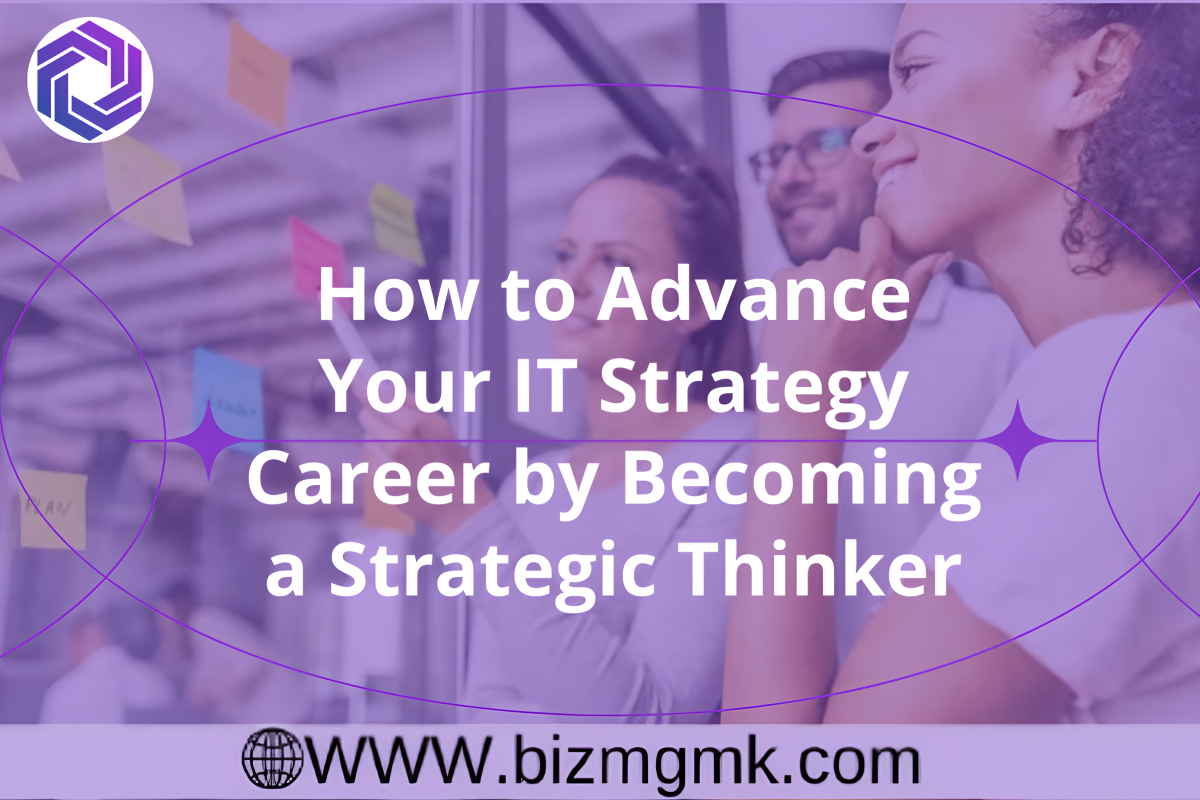
In today’s rapidly evolving tech-driven world, IT professionals are no longer just responsible for maintaining systems and infrastructure. They play a key role in driving business innovation and growth. As a result, the ability to think strategically is critical for advancing your IT career. But how can you shift from being a technical expert to a strategic thinker? Here’s a guide on how to elevate your IT strategy career by positioning yourself as a strategic thinker.
1. Understand the Business Beyond Technology
Strategic IT professionals need to go beyond their technical expertise and understand how the business operates. This involves learning about the company’s goals, industry trends, customer needs, and market challenges. By doing so, you can better align IT initiatives with broader business objectives.
- Action step: Engage with leaders from various departments, such as marketing, finance, and operations, to understand their challenges and how technology can help solve them. This will position you as a business-minded IT leader who focuses on the company’s overall success, not just its technical performance.
2. Adopt Big-Picture Thinking
It’s easy to get caught up in the day-to-day tasks of managing IT projects. However, strategic thinkers take a step back and consider how each initiative contributes to the organization’s long-term vision. This big-picture thinking helps you make decisions that drive sustainable growth and innovation.
- Action step: When working on projects, ask yourself how they support the company’s broader goals. Look for ways to optimize IT initiatives so they align with the company’s future direction. This approach will help you become a more proactive and forward-thinking IT leader.
3. Sharpen Analytical Skills
In IT strategy, data is your best friend. Strategic thinkers use data and analytics to inform their decisions, identify trends, and build strong cases for technology investments. By mastering the ability to analyze data, you can make better-informed decisions and create more compelling strategies.
- Action step: Learn how to use data analysis tools and techniques to assess performance metrics, project outcomes, and emerging trends. Use these insights to identify areas where IT can create more value for the business. The more data-driven your decisions are, the more persuasive your strategic proposals will be.
4. Improve Communication Skills
To succeed as a strategic thinker in IT, you must be able to communicate complex technical concepts in simple terms that non-technical stakeholders can understand. Your ability to influence decision-makers and gain support for your ideas will depend on how effectively you can communicate the business value of IT initiatives.
- Action step: When presenting to executives or other stakeholders, focus on the business outcomes rather than the technical details. Use storytelling techniques to illustrate how IT projects can solve business problems and drive growth. This will make your proposals more compelling and increase the chances of getting buy-in from leadership.
5. Foster Cross-Department Collaboration
Strategic IT leaders don’t work in isolation. They collaborate with teams across the organization to ensure that IT strategies align with the goals of other departments. Building strong cross-functional relationships will help you gain a deeper understanding of the company’s needs and enable you to create more effective IT strategies.
- Action step: Schedule regular meetings with leaders from other departments to discuss their technology needs and priorities. By maintaining open lines of communication, you can ensure that IT remains a key partner in achieving business success, rather than being seen as just a support function.
6. Stay Updated on Industry Trends
Technology is constantly evolving, and staying ahead of trends is a hallmark of a strategic thinker. By staying informed about new technologies and industry developments, you can anticipate changes that may impact your organization and recommend proactive solutions.
- Action step: Subscribe to industry publications, attend webinars, and participate in conferences to stay updated on emerging technologies and trends. Use this knowledge to suggest innovative initiatives that can keep your organization competitive in a rapidly changing market.
7. Focus on Risk Management
A key aspect of strategic thinking is the ability to anticipate risks and take steps to mitigate them. In IT, this is particularly important, as poor decisions regarding technology investments or security can have significant consequences. Understanding risk management and developing contingency plans is essential to your success as a strategic IT leader.
- Action step: Evaluate potential risks when considering new technology initiatives. Consider factors like security vulnerabilities, scalability, and potential disruptions. Propose strategies to mitigate risks while achieving the desired business outcomes. This approach will demonstrate your ability to think critically and protect the organization from potential threats.
8. Commit to Continuous Learning
The IT landscape is constantly evolving, and so must your skills and knowledge. A commitment to continuous learning is crucial for staying relevant in your field and positioning yourself as a forward-thinking leader. By continually improving your expertise in emerging technologies, leadership, and strategic management, you can stay ahead of the curve.
- Action step: Invest in professional development by taking courses, earning certifications, or attending workshops on topics like strategic management, leadership, and new technology trends. Seek mentorship from experienced IT leaders who can guide you in developing your strategic thinking skills.
Conclusion
To advance your IT strategy career, positioning yourself as a strategic thinker is essential. By understanding business goals, thinking long-term, analyzing data, communicating effectively, fostering collaboration, staying ahead of industry trends, managing risks, and committing to continuous learning, you can transition from a technical expert to a strategic IT leader. As organizations continue to rely on technology to drive growth and innovation, your ability to think strategically will set you apart and help you achieve long-term success in your IT career.
Read More: How Delegation Can Propel Your Digital Marketing Career